
 Wyłącznie dla firm
 Infolinia +48 22 510 20 10
 Faktura VAT
 Szybka dostawa
 Ponad 125 000 produktów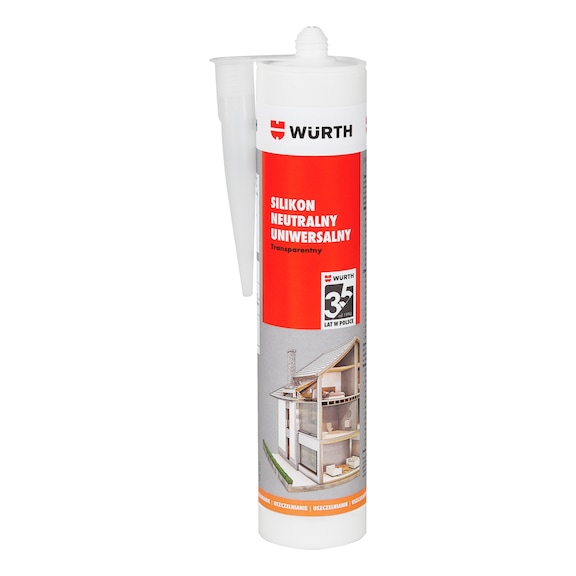
For detailed information, other images and documents, please select individual articles from the following table.

MEKO-free universal sealant Universal sealant
Universal, elastic sealant that cures under the influence of air humidity and is intended for sealing and grouting joints and protecting against moisture

Register now and access more than 125,000 products
Variants
Register now and access more than 125,000 products
- NO MEKO product
- Excellent resistance to mould and fungi
- Neutral for alkaline surfaces
- Very good adhesion to a wide variety of surfaces
- Excellent mechanical properties
- Resistant to UV radiation
- Compatible with a wide range of construction materials
- Sealing of acrylic bathtubs, sinks and shower trays
Adhesion testing prior to application is recommended. The sealant should not be used on bituminous surfaces, partially vulcanised rubber, chloroprene or other construction materials that emit oil, plasticisers or solvents. Not suitable for bonding applications in aquariums and terrariums. The sealant is not suitable for applications involving structural glazing. There is a risk that the silicone may not be compatible with primers/paints/varnishes and other materials used in the manufacture of windows and doors. A test is therefore recommended.
EN 15651-1:2012 F-EXT-CC 25LM
EN 15651-2:2012 G-CC 25LM
EN 15651-3:2012 S XS1
EN 15651-4:2012 PW-INT CC
EMICODE: EC1 PLUS
All the stated parameters are based on laboratory tests that conform to the manufacturer's internal standards and rely greatly on the curing conditions of the product (e.g. environment, surface temperature, quality of equipment used and user's capabilities).
- Silicone can be used for natural stone, marble, granite and sandstone
- Elastic sealing of the glazing in window frames made from wood, metal and PVC
- Sealing construction elements made from concrete, wood, metal and plastic
- Sealing façades and external connections
- Sealing joints that are subject to moisture (sanitary applications)
- Sealing ceramic tiles
- Small repairs at home
Cut off the top end of the thread. Screw on the nozzle tip and cut it at an angle of 45°, whereby the diameter corresponds to the width of the gap. Apply the sealant with a mechanical or pneumatic gun. For optimal results, the applied sealant should be smoothed immediately with a joint knife saturated in soapy water. Remove the masking tape before a skin is formed. The joint should cure completely.
Select RAL-colour code
!! NOTE: On-screen visualisation of the colour differs from real colour shade!!